

Using educational visits to support Classical Civilisation GCSE and A-level study
A Classical Civilisation school trip gives students the opportunity to engage directly with the ancient world, bringing key curriculum themes to life through first-hand experience of ancient sites and material culture.
By placing students within the landscapes of the ancient world, these trips help transform abstract concepts into tangible, memorable learning experiences.
Our programmes are carefully structured to align with GCSE and A-level Classical Civilisation specifications, supporting both content knowledge and assessment objectives through guided visits, expert context and purposeful exploration.
How the trip supports classroom learning:
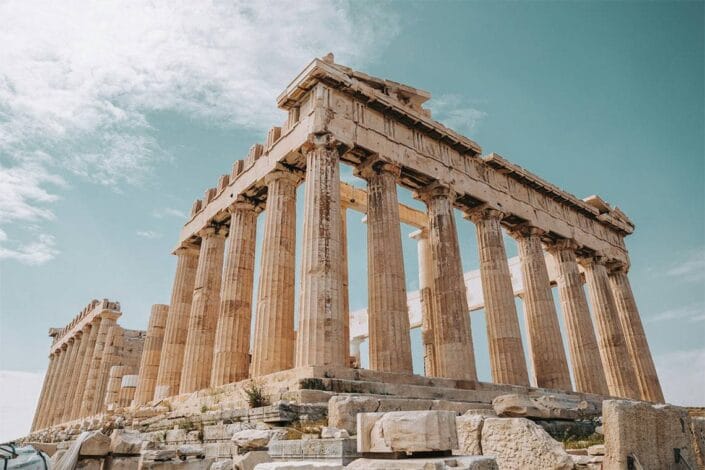
Ancient Greece
Democracy and citizenship are explored through key civic spaces such as the Agora of Athens and the Pnyx, where students can visualise how political participation functioned in practice.
Philosophy is contextualised through the physical spaces of Athenian intellectual life, helping students connect philosophical ideas to the social and political environment in which they developed.
Drama and religion are reinforced through visits to ancient theatre spaces and sanctuaries, supporting study of performance, ritual and the role of religion in public life.
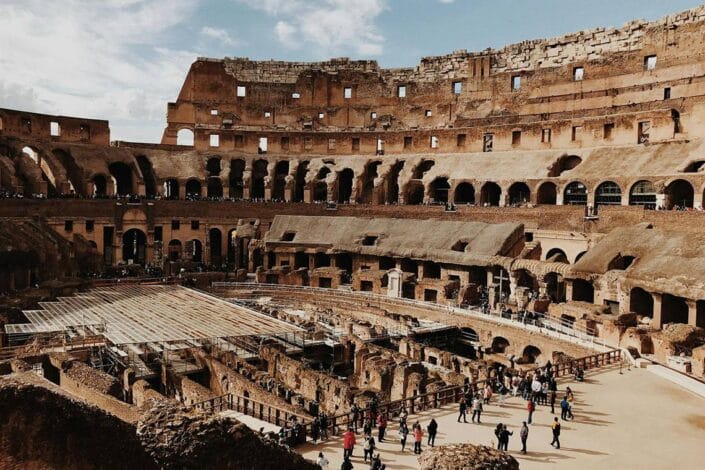
Ancient Rome
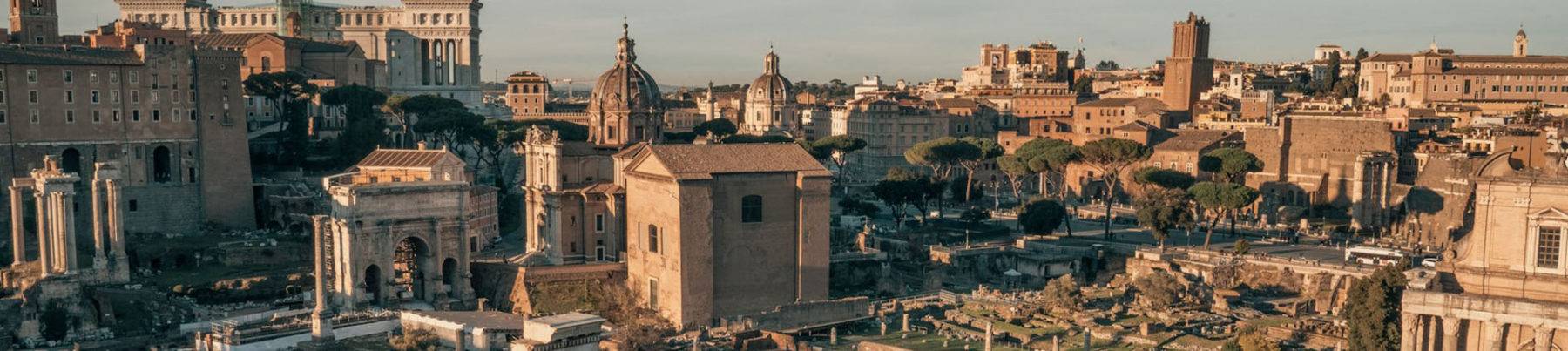
Republican and imperial politics are examined through the Roman Forum, allowing students to trace political change across different periods of Roman history.
Social structure and public life are explored via temples, basilicas and amphitheatres, giving students insight into hierarchy, patronage and civic identity.
Religion and ritual are contextualised through sacred sites and funerary spaces, supporting analysis of belief systems, state religion and private worship.
In practice, teachers use these visits to:
- Support source evaluation using real locations and artefacts
- Strengthen AO1 knowledge and contextual understanding
- Improve written responses through stronger spatial and cultural awareness
Crucially, seeing how sites relate to one another geographically helps students form clearer, more confident arguments in extended answers and essays.
Flexible humanities learning
These Classics trips also work well as part of a wider humanities programme and can be combined with History and Politics trips, allowing departments to reinforce shared themes such as citizenship, power, governance and belief across subjects.
With full planning support from Activ4, including curriculum-led itineraries, risk management and on-trip assistance, these visits are designed to be straightforward for teachers to run and academically robust for students.
Explore our Classics school trips to see how immersive, curriculum-linked travel can support Classical Civilisation teaching beyond the classroom.
